01 · Vehicle and duty
Provide make, model, year, axle load and the environment in which the vehicle operates. Include modifications that affect the wheel or brake package. Note the tire size and any service conditions that should be considered.
Gather a few dimensions and application details before comparing forged and cast alloy wheel options.
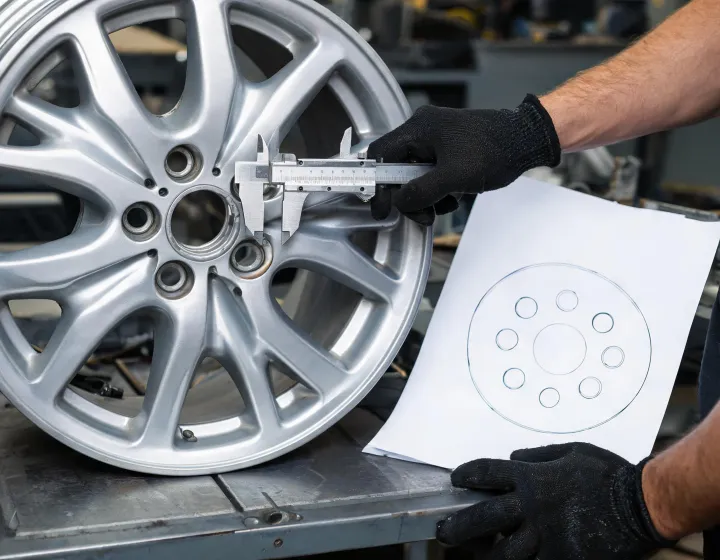
A useful wheel request describes the platform, model year, axle position and intended operating conditions. These details let the review team identify the interfaces and load assumptions that need confirmation. If a drawing is available, include its revision and explain whether it is approved or preliminary. A complete list of unknowns is also valuable: it shows where the project needs a measurement or a decision before a configuration is released.
Provide make, model, year, axle load and the environment in which the vehicle operates. Include modifications that affect the wheel or brake package. Note the tire size and any service conditions that should be considered.
List rim diameter and width, PCD, offset and center bore. Identify fastener seating and check clearance to the brake caliper and suspension. Specify whether the dimensions come from an approved drawing or an existing part.
Specify target market, anticipated quantity, finish, packaging and validation needs. Flag documentation requirements before samples are ordered and identify who will accept the resulting measurements.
Use these stages as a checklist rather than a claim of verified fitment. Each step may uncover an issue that sends the review back to an earlier decision.
1. Identify the vehicle and load
2. Record the mounting interface
3. Review clearance and tire compatibility
4. Agree evidence and sample criteria
Ask for evidence relating to the specific wheel and market. A quality system certificate does not itself establish product approval. Regulatory requirements and supporting documents should be checked for the exact application, including any limits on vehicle use or wheel configuration. Forged wheels may suit a low-volume program prioritizing strength-to-weight and custom dimensions; cast or flow-formed designs may offer more styling freedom and different tooling and volume economics. Compare actual designs, load ratings, validation, lead time and costs: the manufacturing process alone does not establish suitability. For a sample brief, record rim diameter and width in inches, pitch circle diameter and offset in millimetres, and wheel load rating in kilograms. These are request fields, not product ratings.
Send what you have; we can help identify missing dimensions and the next review point.